How to Track Macros When Eating Out (Without Guessing Wildly)
Restaurant meals are bigger, richer and harder to log than home cooking. Here’s how to read a menu, estimate a plate in under a minute, and enjoy eating out without derailing your week.

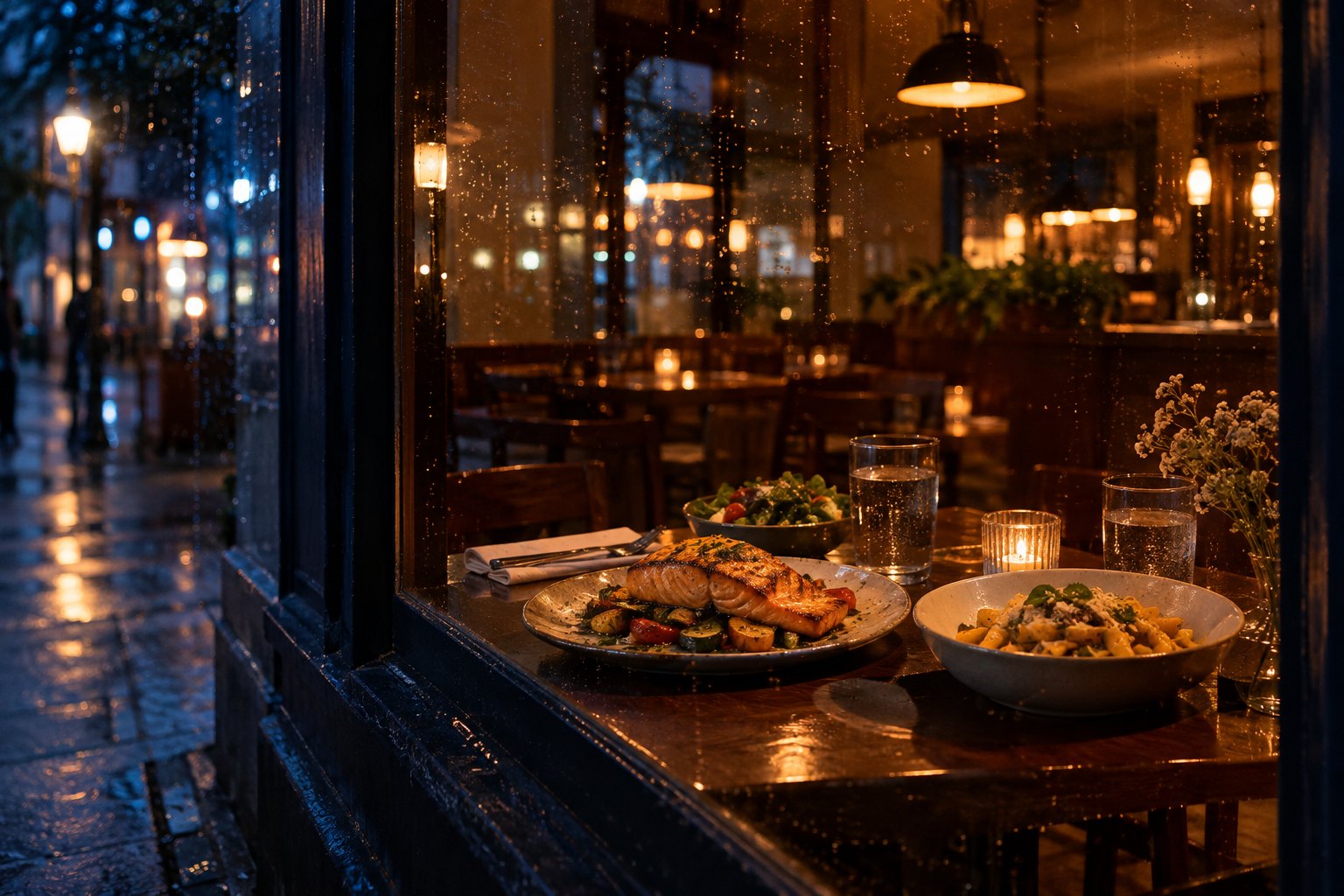
You’ve been consistent all week. Then Friday night arrives, someone suggests that new place downtown, and suddenly you’re staring at a menu with no numbers, wondering whether to log “pasta, large” or just give up on the day.
Eating out doesn’t have to be a tracking black hole. You can’t weigh food at a restaurant, but you can make good estimates, spot the high-calorie cues on a menu, and use a couple of simple habits that keep a night out from turning into a lost week. This guide shows you how.
- In one multi-city study, 92% of restaurant meals exceeded the calories needed for a single meal.
- Cooking words matter: grilled, steamed, roasted vs crispy, creamy, glazed.
- Estimate the plate in parts and add a 15 to 20% buffer for hidden oil and sauce.
- Your weekly pattern matters far more than any single dinner out.
Why restaurant meals add up so fast
Restaurant food is built to taste great, not to fit your macros. That usually means bigger portions, more oil and butter, richer sauces and a bread basket before you start. In a 2016 study that measured frequently ordered meals from restaurants in Boston, San Francisco and Little Rock, 92% exceeded the calorie needs for a single meal, and meals from independent and small-chain restaurants averaged roughly 1,400 calories.
Even when calories are listed, they’re estimates. In the U.S., chains with 20 or more locations must post calories on their menus, which helps a lot, but measured values can still differ from the stated ones, especially in dishes where the kitchen adds oil or sauce by eye.
Read the menu like a pro
Menus leave clues. Words describing the cooking method or the sauce often tell you more than the main ingredient does. Tap the words on this menu to see what they usually mean for calories:
Cooking methods and sauces usually tell you more than the main ingredient.
You don’t need to avoid the richer options. Just know which words signal extra oil, butter, cream or sugar, and decide which one is worth it tonight. It’s a lot like the hidden fats we covered in dietary fat explained.
Estimate a plate in a minute
When there’s no nutrition info, break the plate into parts and estimate each one. A palm-sized portion of meat or fish is roughly 120 to 150 g cooked, a fist of rice or pasta is about a cup, and restaurant cooking almost always includes added fat. Build your plate here, then add a buffer for what you can’t see:
When you can’t measure, estimate a little high. The kitchen rarely errs on the light side.
A 15 to 20% buffer isn’t pessimism; it’s honesty about the oil, butter and sauce you can’t measure. Estimates that lean slightly high tend to be closer to reality than estimates that assume the kitchen was careful. For the bigger picture on why small gaps matter, see the math of small errors.
The half-plate trick
Restaurant portions are often two servings on one plate. Deciding up front to take half home is one of the simplest moves there is, and it gives you lunch tomorrow:
If you weigh the leftovers at home, you’ll even know exactly what you ate the night before: just subtract.
Zoom out to the week
One big restaurant meal won’t change anything. What matters is how often you eat out and what those meals look like on average. Move the sliders to see the weekly effect of different approaches:
The goal isn’t to eat out less, it’s to eat out with a plan most of the time, so the occasional all-out feast has plenty of room. If logging restaurant meals feels slow, our guide to logging meals faster has shortcuts that help.
Want to practice estimating before your next meal out? Play How many calories are on this plate?, a free one-minute game with three weighed plates.
Common questions
Your eating-out plan
Look at the menu before you go and pick a dish you’ll enjoy. Read the cooking words: grilled, roasted and steamed are your friends; crispy, creamy and glazed are treats. Build your protein first, ask for sauces on the side, and decide about the bread basket on purpose. Estimate the plate in parts, add a 15 to 20% buffer, and log it before the dessert menu arrives. Then relax and enjoy the company.
Plan the order, estimate honestly, enjoy the night.
- Urban LE et al. (2016). Energy contents of frequently ordered restaurant meals and comparison with human energy requirements and USDA database information: a multisite randomized study. Journal of the Academy of Nutrition and Dietetics (Tufts summary).
- U.S. FDA. Menu labeling requirements for chain restaurants. FDA.
- Urban LE et al. (2010). The accuracy of stated energy contents of reduced-energy, commercially prepared foods. J Am Diet Assoc.
- Nutrient values: USDA FoodData Central (approximate).
Portion and calorie values are typical estimates for illustration. This article is general information, not medical advice.