ScaleMyPlate Review: A Founder’s Honest Take on What Works and What’s Next
Written by the people who built it, so take it with a grain of salt. We tried to be the review we’d want to read: real specs, honest scores, the weak spots, and who should skip it.
Let’s get the obvious part out of the way: we make ScaleMyPlate, so this is not an independent review. What we can offer instead is the inside view: what the scale does well today, where it’s still rough, what we’re building next, and who we think shouldn’t buy it.
We’ve tried to write the review we’d want to read before spending money on a new gadget. Real specs from our product page, honest scores, and no pretending the first version is perfect. If you’d rather read something more neutral first, our comparison of smart food scales puts ScaleMyPlate next to cheaper alternatives.
- ScaleMyPlate puts the scanner, database and macro math on the scale. The phone is optional.
- Strongest today: 1 g weighing, fast logging and recipe portions for meal prep.
- Still growing: regional food coverage, on-device history and health-app integrations (not available yet).
- Worth it if you track most days. If you weigh food occasionally, a basic scale is the smarter buy.
What ScaleMyPlate is (and isn’t)
ScaleMyPlate is a food scale that does the whole macro-tracking job on the device itself. It has a color touchscreen, a built-in barcode scanner and a nutrition database. You scan a packaged food or search a fresh one by name, set it on the plate, and the calories, protein, carbs and fat for that exact weight appear on the screen, along with a running total for the whole meal.
The quick facts, straight from the spec sheet:
What it isn’t: a body-composition scale, a camera that guesses your food, or a subscription service. There’s a companion app for Android and iOS that syncs your history over Wi-Fi, but you don’t need your phone to weigh, log or hit your targets.
Why we built it
The idea came from a frustration that anyone who has tracked macros for a while will recognize. Weigh the food on one device, pick up the phone, open the app, search, pick an entry, type the weight, put the phone down, wash your hands, and repeat for every ingredient. The tracking itself works. The friction is what makes people quit.
“I asked myself one question every morning while making breakfast: why can’t the scale just show me my macros right now? That question is the entire reason ScaleMyPlate exists. We didn’t want to build a smarter app. We wanted to remove the app from the workflow.”
 Alexis SavardFounder, ScaleMyPlate
That decision shaped everything else: the touchscreen, the on-device database, the hardware scanner, and the goals and history that live on the scale. Each one exists because the answer to “should this need a phone?” was no.
The honest scorecard
Here’s how we’d score our own first version, out of five. Tap any row to see why. We expect you to discount our enthusiasm a little, so we were deliberately strict on the weak spots:
Where it shines: batch cooking and repeat meals
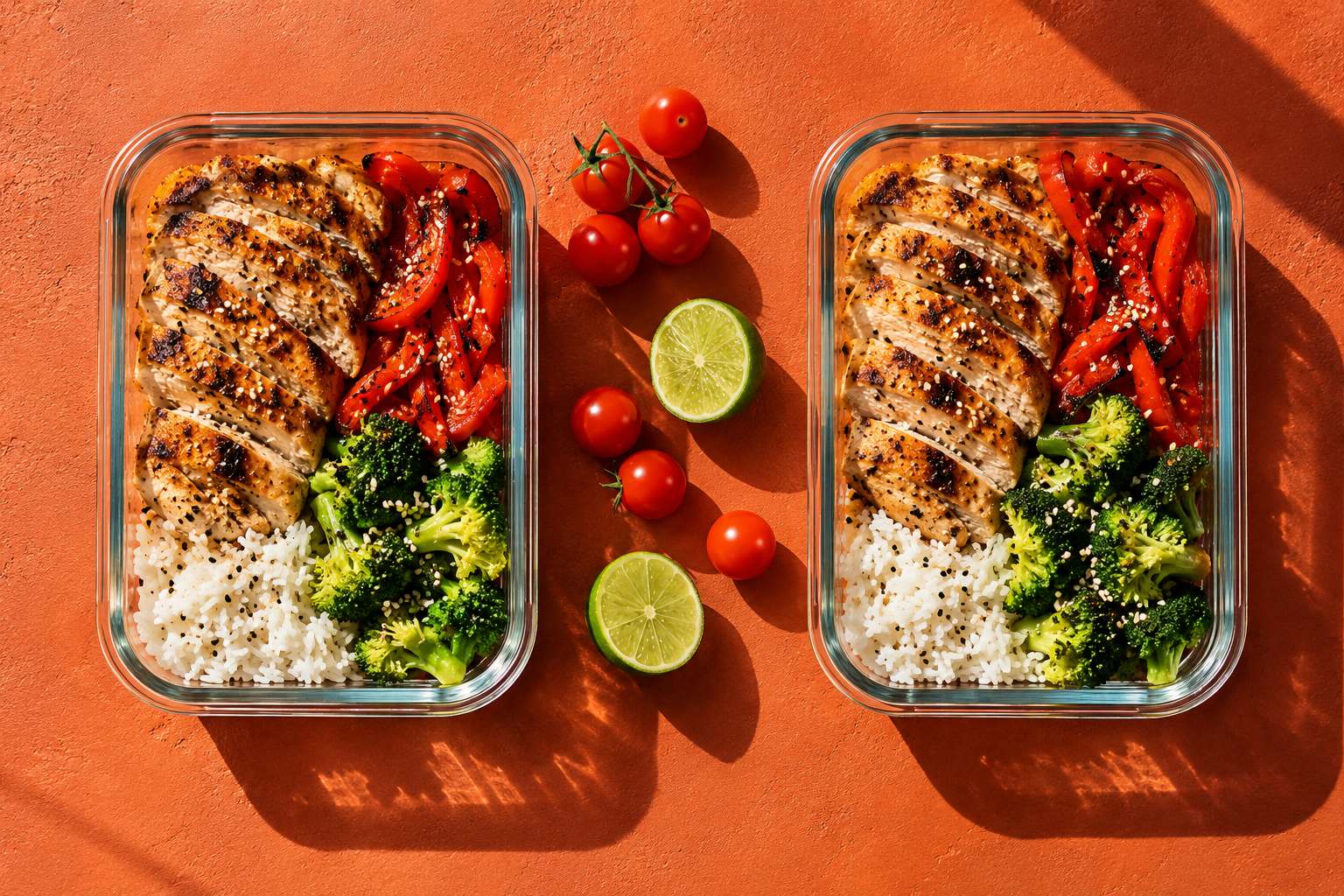
The feature early users mention most isn’t the scanner. It’s recipes. Weigh each ingredient as you cook a big batch, save it as a recipe, and from then on you just weigh your portion. The scale works out the macros by weight ratio, so it doesn’t matter whether you serve yourself 280 g or 420 g:
The same idea works for households. Each scale supports up to two user accounts with their own goals and history, so two people can share one scale without mixing up their logs.
What’s coming next
Every unit gets software updates over Wi-Fi, so the scale you buy keeps improving without you doing anything. Here’s what we’re working toward. Plans can change based on feedback, and we’d rather under-promise:
- Public launch after the early-access period
- Over-the-air updates for every unit
- Recipes, two user accounts and offline logging
- A larger database with more regional and specialty foods
- Faster barcode scanning in low-light kitchens
- Better management of saved foods and meals
- Longer history on the scale, beyond 7 days
- Apple Health, Garmin and MyFitnessPal integrations
- Macro trend charts and goal suggestions in the app
- New hardware variants
A word on accuracy
Accuracy is the reason precision food scales exist, so here’s how ScaleMyPlate gets its numbers. The weight comes from load cells accurate to 1 gram, and each unit is calibrated individually during assembly. The nutrition values come from the barcode or from our food database. Multiply one by the other and you get the macros. No guessing involved.
That matters because guessing is where tracking usually goes wrong. In tests presented at the American Society for Nutrition’s NUTRITION 2026 meeting, four photo-based calorie apps underestimated meals by roughly a third, mostly by missing fat. And as we explain in why macro tracking sometimes stops working, even careful people under-log when they estimate.
“We don’t guess. The barcode tells us what’s in the package, the load cells tell us how much is on the plate, and the math is the math. If you’re counting carbs for medical reasons or tracking protein to the gram, estimation isn’t good enough.”
Alexis SavardFounder, ScaleMyPlateTo be fair to every other scale: a $20 kitchen scale is just as accurate at weighing. The difference is everything that happens after the number appears.
Is it worth it for you?
It depends on how you track, and some people genuinely don’t need it. Answer honestly and watch the needle:
Common questions
The verdict
If you weigh food a few times a week, ScaleMyPlate is more device than you need, and a basic scale with a free app will serve you well. If you track daily for fat loss, muscle gain, medical reasons or batch meal prep, it removes the part of tracking that makes most people quit: the phone loop.
The first version is solid where it matters most, weighing, logging speed and recipes, and still growing in database coverage, history and integrations. Because updates arrive over Wi-Fi, today’s scale is the least capable it will ever be. Whatever you choose, start with good targets from our free Calories & Macro Calculator.
Built by people who were tired of the phone loop. Improving every update.
- ScaleMyPlate. Smart food scale: specifications, pricing, trial and warranty. scalemyplate.com/smart-food-scale.
- ScaleMyPlate. Frequently asked questions. scalemyplate.com/faq.
- American Society for Nutrition (2026). Photo-based calorie-tracking apps may underestimate energy in meals. EurekAlert! news release.
- Etekcity. ESN00 Smart Nutrition Scale, product specifications. etekcity.com.
This review is written by the ScaleMyPlate team. Prices, features and roadmap plans may change. The recipe values shown are an example from a saved recipe.