
Why AI Food Scales and Apps Often Miss the Mark on Accurate Nutrition Tracking
You’ve been logging every meal, hitting your targets on paper, and still not seeing results. Before you question your willpower, it’s worth questioning your tools. AI food scales and nutrition apps sound impressive — but the accuracy gap between what they report and what you’re actually eating could be quietly wrecking your progress.
The Myth of “Smart” Food Tracking
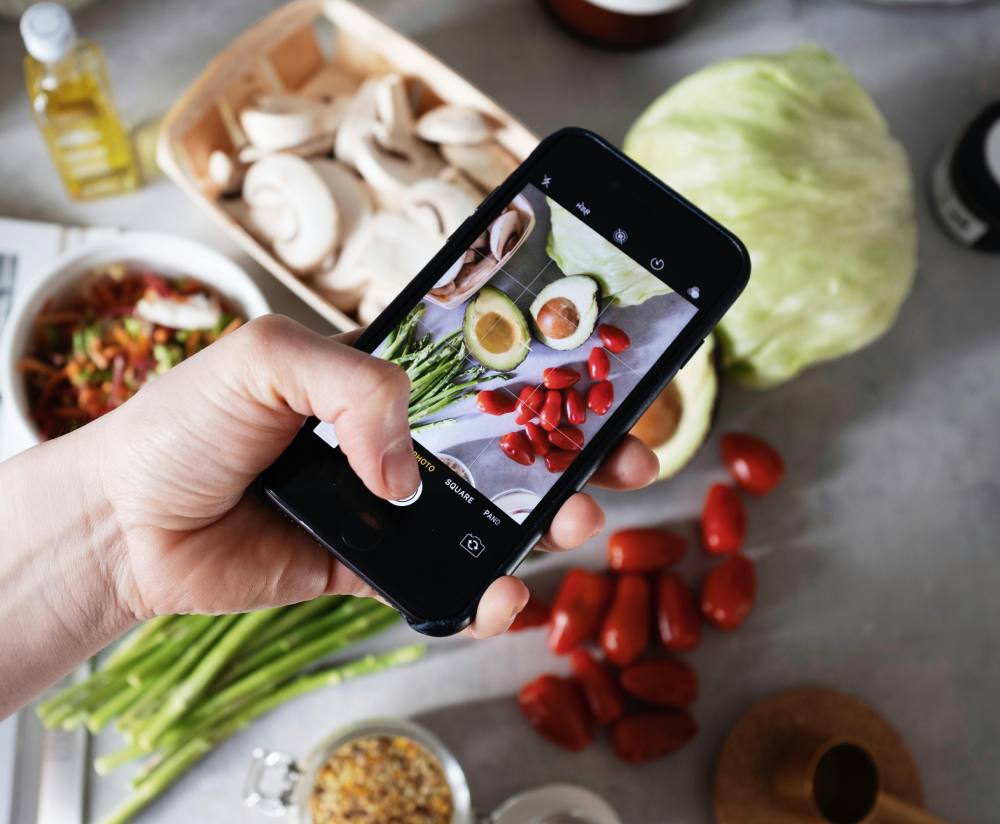
There’s a seductive appeal to pointing your phone at a plate and having an app tell you the macros. No manual entry, no guesswork — just instant results. But here’s what that process actually involves: an algorithm looks at a photo, makes a visual guess about what’s on your plate, estimates the portion size from a 2D image, and cross-references that guess against a database. Every single one of those steps introduces error.
AI-based food recognition scales have been tested with error rates reaching up to 15–20% per item. That sounds small until you do the math. A 200-calorie chicken breast logged at 20% under means you’re eating 240 calories — but your tracker thinks you ate 200. Stack that across three meals a day, and you could be consuming 120–150 more calories than you think. Over a week, that’s nearly 1,000 calories unaccounted for.
Visual Estimation Errors
AI cameras can’t reliably judge depth, density, or hidden ingredients. A thick slice of salmon and a thin one look similar in a photo — but they’re not.
Unverified Database Matches
Many apps let users submit their own food entries — which means the data behind your log is only as accurate as whoever uploaded it last.
Compounding Mistakes
Errors don’t cancel out — they stack. A slightly wrong guess on protein plus an off reading on fats can push your daily macros significantly off target.
What a 20% Error Actually Costs You
The numbers behind tracking errors aren’t abstract — they translate directly into stalled fat loss, unexplained weight gain, or muscle-building plateaus that feel impossible to explain. Here’s how the math plays out in practice:
If you’ve been eating at what you believe is a 500-calorie deficit and not losing weight, a 20% tracking error could realistically eliminate that entire deficit. You’re not failing — your data is. And if your tools are also charging you a monthly fee to deliver that inaccurate data, that’s a double loss you shouldn’t have to accept.
Why Phone Apps Can’t Close the Gap on Their Own
Nutrition apps have improved dramatically over the years. Some have massive food databases. Some connect to wearables. Some even use AI to generate meal suggestions. But there’s a fundamental limitation every app shares: they rely on you to weigh, estimate, or photograph your food separately, and then input that information manually. That gap between your plate and your phone is exactly where accuracy dies.
You weigh 180g of rice. You open your app. You search “cooked white rice.” You find 14 different entries, some user-submitted, with calorie counts that range from 130 to 210 per 100g. You pick one. You might have picked right. You might not have. The app has no idea. It trusts whatever you enter.
Then there’s the phone problem itself. You’re in the kitchen, hands potentially greasy, juggling pots and cutting boards, trying to log each ingredient before you forget. Most people don’t. They guesstimate later. Or they skip it entirely. Research consistently shows that self-reported dietary intake underestimates actual consumption — sometimes by 20–40% — precisely because the logging process is disconnected from the eating process.
ScaleMyPlate eliminates the gap entirely. Instead of weighing food on one device and logging it on another, ScaleMyPlate combines a precision food scale with a built-in touchscreen and real-time macro display — so as you add each ingredient, calories, protein, carbs, and fats update live, right in front of you. Scan packaged foods with the built-in barcode scanner for instant data, or search fresh ingredients by name on the touchscreen and let the 1-gram precision sensors do the math automatically. No phone required. No guesswork. No subscription fees. Learn more at scalemyplate.com.
How Real-Time, On-Device Tracking Changes Everything
When your scale and your tracker are the same device, accuracy stops being a daily negotiation. Here’s what that looks like in practice with ScaleMyPlate:
Live Macro Feedback as You Build Your Plate
Every gram you add updates your calorie, protein, carb, and fat totals in real time on the touchscreen. You see the full nutritional picture before the first bite — not after the fact.
Built-In Barcode Scanner for Packaged Foods
Scan any packaged item and ScaleMyPlate pulls the nutrition data instantly — no typing, no searching, no phone required. Just scan, place on scale, and log.
1-Gram Precision, Calibrated in Canada
Professional-grade load cells individually calibrated in Canada mean your weight readings are exact — not estimated, not approximated, not guessed by an algorithm looking at a photo.
Save Recipes and Batch Meals Once, Reuse Forever
Weigh your go-to meals once, save them, and reload them in seconds every time you cook them again. Meal prep and batch cooking become effortless without re-logging every ingredient.
The Bottom Line
If your tracking hasn’t been working, the problem probably isn’t your discipline or your diet plan. Nutrition apps built around manual logging and AI image guessing have a structural accuracy problem — and that problem compounds every single day. A tool that requires you to estimate, remember, or photograph your food will always carry a margin of error that works against you. That’s not your fault. That’s the tool’s fault.
Accurate tracking requires the scale and the tracker to be the same device — working together, in real time, at the moment food is weighed. That’s exactly what ScaleMyPlate was built to do. When every gram is counted precisely as it hits the plate, the guesswork is gone — and so is the gap between the results you expect and the results you actually get. Visit scalemyplate.com to see how on-device, real-time nutrition tracking finally makes accuracy achievable.