
30 Days of Precise Macro Tracking on Your Body Composition
Most people give macro tracking two weeks, see the scale barely move, and conclude it doesn’t work for them. What they don’t realise is that the first two weeks aren’t where the results live. They’re where your data gets calibrated. If you’ve ever quit before the month was up, this is what you missed.

What People Expect vs. What Actually Happens
There’s a gap between how people think macro tracking works and how it actually works. That gap is why so many people abandon it before it has a chance to do anything meaningful.
Results show up in the first week or two
Most people expect visible changes quickly and interpret early plateau as failure. They assume the approach isn’t working when they stop seeing daily movement on the scale.
Week one and two are calibration, not results
Your body is adjusting. Water weight shifts. You’re learning your actual intake patterns. The compounding effect of consistent, precise data takes three to four weeks to show up as measurable body composition change.
Tracking calories is enough — macros are overkill
A calorie goal feels simpler. Most casual trackers stop there and wonder why their energy, muscle retention, and fat loss don’t respond the way they expected.
Protein targets alone change body composition outcomes
Hitting your calorie goal but missing protein by 40–60g daily measurably reduces muscle retention during a deficit. Macros aren’t detail work — they’re the whole mechanism.
What Happens to Your Body, Week by Week
Thirty days of precise tracking isn’t one long straight line to results. It’s four distinct phases, each doing different work. Here’s what’s actually happening inside each one:
Baseline Revealed
You discover your actual intake — often wildly different from what you assumed. Most people find they’ve been undereating protein by 30–50g daily and overestimating their carb and fat control. This week is uncomfortable but essential. You’re not fixing anything yet. You’re seeing clearly for the first time.
Habits Begin to Lock In
The friction of daily weighing starts to reduce. You know roughly what your portions look like. You’ve found the meals that hit your targets consistently. Water weight stabilises. Your body is adjusting to the new input signals. The scale may not move much — but your data is becoming reliable enough to act on.
Measurable Change Begins
This is where body composition starts to shift in ways you can actually see and feel. Energy levels stabilise. Training performance improves as protein intake becomes consistent. If you’re in a deficit, fat loss becomes measurable — not from aggressive restriction, but from three weeks of accurate, consistent input data finally compounding.
Your First Real Feedback Loop
By day 30, you have something most people never get: a full month of reliable nutrition data matched against measurable body outcomes. You can see what worked, what didn’t, and exactly where to adjust. This is the point where tracking stops feeling like a chore and starts feeling like a genuine tool — because it finally is one.
The Accuracy Gap That Changes Everything
Precise tracking isn’t just about discipline — it’s about the quality of data you’re working with. Here’s what target accuracy typically looks like before 30 days of precise tracking versus after, across the four key macros:
The difference isn’t just motivational — it’s structural. When your data is 85–94% accurate instead of 42–61%, you’re working from a completely different information base. Adjustments you make actually reflect what’s happening. Plateaus become explainable. Progress becomes predictable.
Why Most People Can’t Sustain It Past Week Two
The intention is always there. The tools usually aren’t. Precision tracking breaks down when the process creates more friction than the results feel worth.
The Phone App Gap
Weighing on a scale then logging on a phone is two separate workflows. By week two, most people start estimating instead of measuring to save time — and the data quality collapses silently.
The Database Problem
Searching “chicken breast” in a phone app returns dozens of entries with different calorie counts. Picking the wrong one consistently skews your protein data by 15–25g per meal.
Re-entering the Same Meals
Most people eat 6–8 meals on rotation. Re-entering the same ingredients every day isn’t tracking — it’s data entry. The repetition is the single biggest reason people abandon consistent logging.
The Tool That Makes 30 Days Actually Achievable
Every breakdown point above has a direct fix built into a single device. The issue was never your commitment to the process. It was a workflow that treated weighing and logging as two separate activities — when they need to be one.
When macros appear on-screen the moment food touches the plate, there’s no separate logging step to skip. When your regular meals are saved and recalled in one tap, there’s no re-entry fatigue. When the data is accurate to the gram from calibrated load cells, you’re not spending week three realising your numbers were off the whole time.
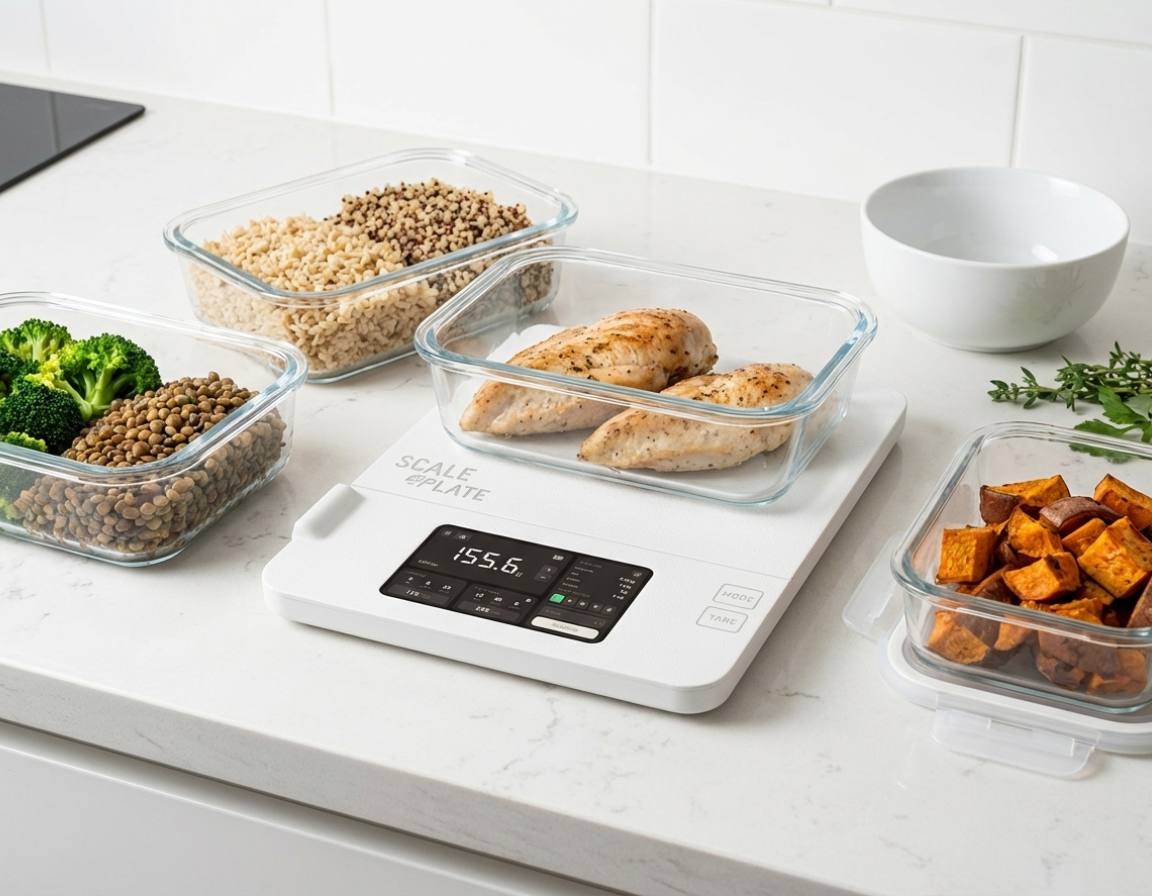
What Changes When the Workflow Actually Works
Consistency over 30 days isn’t a willpower achievement — it’s a design outcome. Here’s what makes it possible.
Live Macro Feedback on the Touchscreen
Protein, carbs, fats, and calories update in real time as each ingredient lands on the plate. Your full meal is logged before you eat it — not reconstructed after.
Recipe Saving for Repeat Meals
Weigh your standard meals once, save them, and pull them up every day with one tap. Eliminates the re-entry fatigue that kills consistency in weeks two and three.
Individual Macro Goal Setting
Set separate targets for protein, carbs, fats, and calories. The device tracks progress against each one in real time — not just a single daily calorie number.
Fully Offline Capable
No Wi-Fi means no excuses. The device weighs and tracks without an internet connection, syncing when reconnected. Your streak doesn’t break because of a dead signal.
The Bottom Line
Thirty days of precise tracking isn’t a challenge you push through on willpower. It’s a month of your body finally receiving consistent, accurate signals — and responding to them. The people who quit at week two aren’t lacking discipline. They’re using tools that make precision harder than it needs to be.
When the workflow removes every friction point, day 30 isn’t an achievement. It’s just Tuesday. ScaleMyPlate is built around that principle — real-time macros on the touchscreen, 1-gram precision, saved recipes, and no monthly fees. Visit scalemyplate.com and start the 30 days that actually count.