
How Bodybuilders Use Food Scales Compared to Casual Dieters
Most people who own a food scale use it the same way — weigh, log, move on. But if you’ve ever watched a serious bodybuilder prep for a show, you know their relationship with a scale is an entirely different thing. Understanding that difference isn’t just for competitors. It’s the blueprint for anyone who wants their tracking to actually produce results.
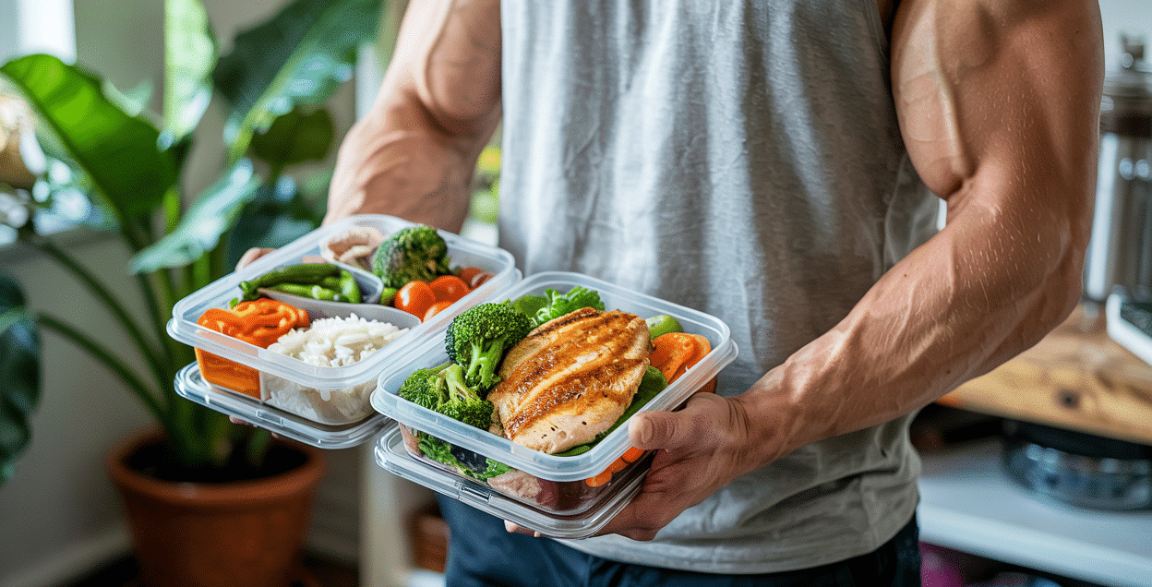
Two People, One Scale, Completely Different Outcomes
The scale itself isn’t what separates a bodybuilder’s results from a casual dieter’s. It’s the precision, consistency, and intent behind how they use it. Here’s what that actually looks like day to day:
Tracking to stay aware
- Weighs food occasionally — skips when in a rush
- Rounds to the nearest 10g without a second thought
- Logs macros after eating, often from memory
- Uses a single daily calorie target
- Treats the scale as a nice-to-have, not a must-have
- Accepts a rough idea of intake as good enough
Tracking to engineer results
- Weighs every ingredient, every meal, every day
- Works to the gram — 10g off is a failed measurement
- Logs in real time as food is portioned and plated
- Tracks protein, carbs, fats, and calories separately
- The scale is the single most important kitchen tool
- Adjusts macros weekly based on body composition feedback
Neither approach is wrong on its own terms. But if you’re training hard, sleeping well, and still not seeing the body composition changes you want — you’re probably operating like a casual dieter with bodybuilder-level goals. That gap is where results disappear.
Where You Fall on the Precision Spectrum
Macro tracking isn’t binary — it’s a spectrum of accuracy. The further right you sit, the more your data actually reflects what’s happening in your body. Here’s how the same tracking habits play out differently across five key areas:
The Calorie Math Behind the Gap
Small differences in approach create surprisingly large gaps in outcome. This isn’t about perfection — it’s about whether your data is precise enough to actually tell you something useful.
“You can’t out-train a tracking error. If your data is wrong, your adjustments are wrong — and you spend weeks fixing a problem you didn’t know you had.”
The core principle behind precision macro trackingThe Three Habits That Separate Precise Trackers from Everyone Else
Bodybuilders don’t just weigh more carefully. They’ve built three specific habits into their process that make their data reliable enough to act on.
Log Before You Eat
Logging in real time — as food is portioned — eliminates memory errors. Logging after eating means reconstructing what you had, which introduces guesswork.
Track Each Macro Separately
Hitting a calorie goal while missing protein by 50g is a failed day for a bodybuilder. Protein, carbs, and fats each drive different physiological outcomes — tracking them individually matters.
Use Data to Adjust Weekly
Precise tracking only pays off if you close the feedback loop. Bodybuilders review weekly data and adjust targets based on what their body actually did — not what they hoped would happen.
Why Most Tools Make Precision Harder Than It Should Be
Here’s the irony: the people who most need precision tracking — serious gym-goers, athletes, anyone with specific body composition goals — are the people most let down by the standard toolkit of a cheap scale and a phone app.
Weighing on a scale, walking to your phone, opening an app, searching for the ingredient, picking the right entry from a dozen near-identical options, typing the weight, and tapping save — that’s six steps per ingredient. For a five-ingredient meal, you’ve just added 30 interactions to your meal prep. Most people shorten that process by rounding, estimating, or skipping entries altogether. Not because they don’t care. Because the friction is genuinely exhausting.
Bodybuilders who track with precision aren’t more disciplined than you. They just have a workflow that makes precision the path of least resistance.

Built for Precision — Whether You’re Prepping for a Show or Just Getting Serious
You don’t need to be a competitive bodybuilder to benefit from bodybuilder-level tracking. These features close the gap between where most people track and where results actually live.
Real-Time Macro Feedback
Protein, carbs, and fats update on the touchscreen as each ingredient is added. No mental math, no delayed logging — your meal’s full macro profile is visible before you eat it.
Built-In Barcode Scanner
Scan any packaged food directly on the device. The nutrition data populates instantly — no phone, no app, no searching through duplicate entries.
Recipe and Batch Saving
Weigh your meal once, save it, and pull it up every week with zero re-entry. Bodybuilders live on repeatable meals — now anyone can track them just as efficiently.
Multiple User Profiles
One device handles separate macro goals for everyone in the household. Individual profiles mean individual tracking — no crossed data, no shared logs.
The Bottom Line
The difference between a bodybuilder’s results and a casual dieter’s isn’t genetics, time in the gym, or access to some secret protocol. It’s data quality. Bodybuilders treat their food scale as a precision instrument — and they’ve built a workflow that makes logging before eating the easiest option, not a chore.
You don’t need a competition on the calendar to train like that. You just need a tool that makes it natural. ScaleMyPlate brings bodybuilder-grade precision to everyday meal prep — real-time macros on the touchscreen, 1-gram accuracy from calibrated load cells, and a workflow that removes every excuse to round or estimate. Visit scalemyplate.com and start tracking like you mean it.