How a Barcode Scale Cuts Your Meal Logging Time in Half
Logging what you eat shouldn’t take longer than eating it. But for most people tracking their nutrition, the process of searching, selecting, weighing, and entering each ingredient is slow enough to make the whole habit feel like a second job. A barcode scale changes that equation entirely — and the time you save is only part of the story.
The Hidden Time Cost of Meal Logging
Walk through what logging a single meal actually looks like with a traditional setup. You finish cooking, pull out your phone, open your nutrition app, search for the first ingredient, scroll through a list of near-matches, pick the closest one, check whether the serving size lines up with your portion, enter the amount, and repeat — for every item on the plate. For a meal with four or five components, you’re looking at three to five minutes of logging, minimum. Do that three times a day and you’re spending 15 minutes or more just recording what you ate.
That might sound manageable. But most people don’t log right after cooking — they do it later, from memory, which introduces its own layer of imprecision. Or they decide the process is too slow and skip it entirely. Research consistently shows that logging fatigue is one of the top reasons people abandon nutrition tracking within the first few weeks, even when their diet is on track. The food isn’t the problem. The friction is.
Why Slow Logging Leads to Skipped Logging
Time isn’t just an inconvenience when it comes to food tracking — it’s a direct predictor of whether the habit sticks. The longer and more complex the logging process, the more cognitive load it puts on the person doing it, and the more likely they are to shortcut, estimate, or quit. These numbers show how quickly that plays out:
The math is straightforward, but the behavioral impact goes deeper than minutes saved. When logging is fast, people do it consistently. When it’s consistent, the data is reliable. And when the data is reliable, it actually informs better decisions. Speed isn’t just a convenience — it’s what makes the entire tracking habit sustainable long term.
What a Barcode Scale Actually Does Differently
A standard food scale tells you how much something weighs. A nutrition app tells you what the macros are for a given food. The problem is that those two pieces of information live in two separate places — which means you have to be the bridge between them every single time you eat. That handoff is where time gets lost and errors creep in.
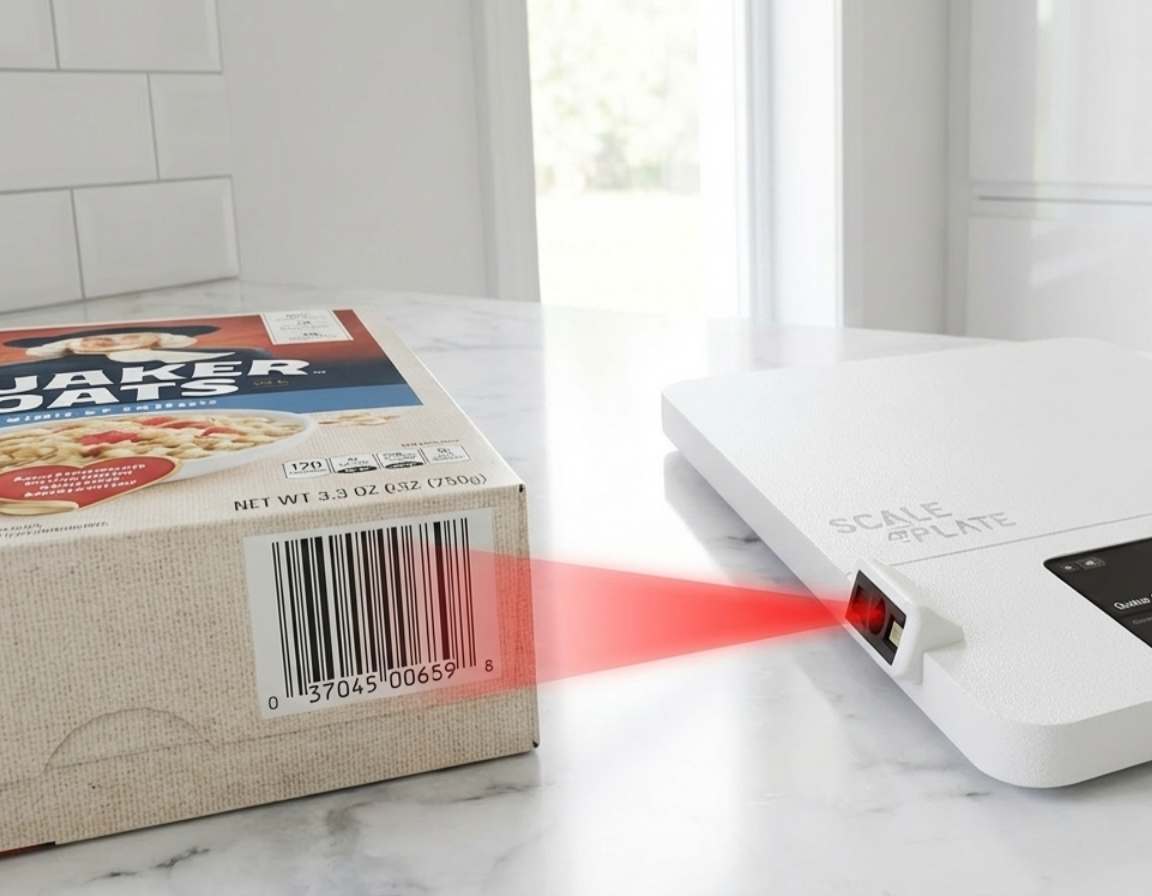
A barcode scale collapses that gap. You scan the product, the nutrition data loads automatically, you place the food on the scale, and your macros are calculated based on the exact weight in front of you. There’s no switching between devices, no unit conversion, no hunting for the right database entry. The scan and the weight happen together, and the result is immediate.
The real efficiency gain isn’t just in the scan itself — it’s in the elimination of every step that used to sit between weighing and logging. When those two actions happen on the same device at the same moment, you don’t just log faster. You log more accurately, more consistently, and with significantly less mental effort than the traditional phone-plus-scale setup requires.
What Makes a Barcode Scale Worth Using Every Day
The concept is simple, but the execution varies. Here’s what separates a barcode scale that genuinely saves time from one that just adds a feature to an otherwise slow process:
Fast, Reliable Barcode Recognition
A scanner that takes several seconds to read a barcode defeats the purpose. Look for instant recognition that pulls nutrition data before you’ve even set the item down.
Gram-Level Weighing Precision
The scan gives you the right data — but the weight needs to be accurate too. A scale precise to 1 gram ensures your macros reflect your actual portion, not a rounded approximation.
Search for Fresh Foods Without a Barcode
Not everything has a barcode. The best setups let you search fresh ingredients by name and calculate macros by weight — so the whole system works for both packaged and whole foods.
Real-Time Macro Display
Seeing your calories, protein, carbs, and fats update as you build your meal — not after the fact — is what turns a fast logging tool into an active decision-making tool.
The Bottom Line
The biggest barrier to consistent nutrition tracking isn’t motivation — it’s the time and friction built into the logging process itself. A barcode scale removes that friction at the source. When scanning, weighing, and calculating all happen on one device in real time, logging goes from a tedious multi-step chore to something you barely notice doing. That’s the kind of system that actually sticks.
If you want to see what that looks like in practice, ScaleMyPlate is a food scale with a built-in barcode scanner and touchscreen that weighs your food and shows your macros live — all in one device, no phone needed. Visit scalemyplate.com to learn more.